
Menu
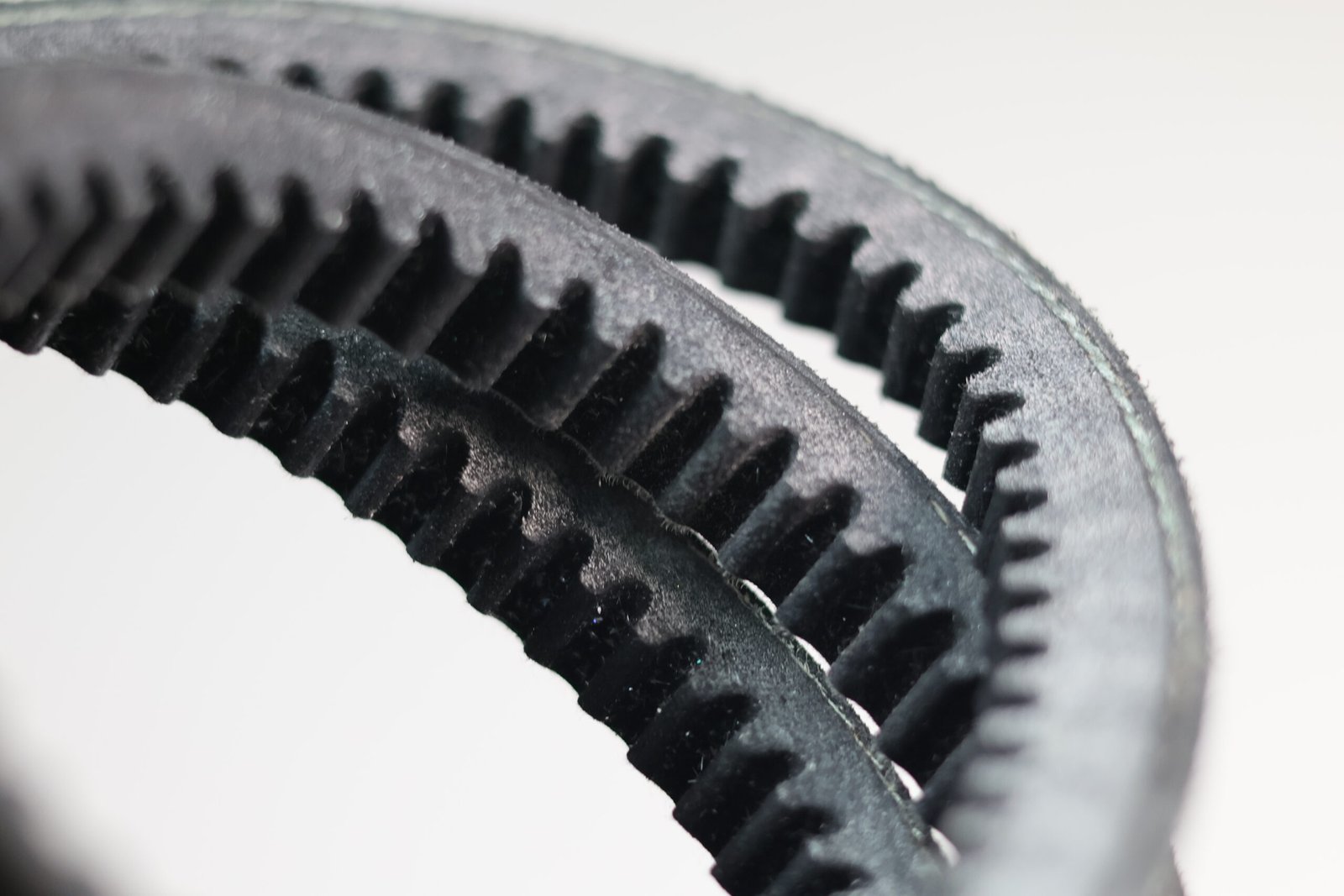

Before serpentine belts took over, V-belts ran everything under the hood. They’re still there in millions of older vehicles, agricultural equipment, and industrial machines — and they’ll be there for decades to come. Parts stores that dropped V-belts from their inventory are now scrambling to find suppliers as classic car restoration booms and farmers keep their 20-year-old tractors running.
We’ve been manufacturing automotive V-belts since 1999. While serpentine belts get most of the attention, V-belts remain a steady 30% of our automotive production. The technology is mature, the applications are well-understood, and the quality requirements are just as demanding as any modern belt.
| Parameter | Specification |
|---|---|
| Belt Types | Classical (A, B, C, D, E), Narrow (3V, 5V, 8V), Cogged, Wrapped |
| Cross Sections | AX, BX, CX (cogged); A, B, C, D (wrapped) |
| Length Range | 500mm to 5000mm+ |
| Materials | EPDM, CR (Neoprene), NR (Natural Rubber) |
| Cord Reinforcement | Polyester (standard), Aramid (heavy-duty) |
| Temperature Range | -30°C to +120°C (CR), -40°C to +150°C (EPDM) |
| Standards | ISO 4184, DIN 2215, RMA/MPTA, SAE J636 |
| Certifications | IATF 16949, ISO 9001 |
The original design. A trapezoidal cross-section wrapped in fabric for protection. Still the most common type for older vehicles and general industrial applications.
Notches cut into the inner surface improve flexibility and heat dissipation. Better performance than wrapped belts in high-speed or compact drive applications.
Higher power density in a narrower profile. Used where space is limited or higher power transmission is needed.
Our automotive V-belt range covers older vehicles and applications where V-belts are still specified:
Pre-1990 vehicles from virtually all manufacturers used V-belts for alternator, water pump, power steering, and A/C drives. We maintain inventory of common sizes and can manufacture to original specifications.
Some modern vehicles still use V-belts for specific accessories:
Many heavy trucks and commercial vehicles use V-belts for auxiliary drives even when the main accessories run on a serpentine belt.
We can match part numbers from:
The traditional V-belt material. Good oil resistance, moderate heat resistance. Still appropriate for many applications, especially where oil exposure is a concern.
Better heat and ozone resistance than CR. Longer service life in high-temperature environments. Our recommendation for most automotive applications.
High elasticity and tear resistance. Used in applications requiring flexibility and shock absorption.
Every automotive V-belt goes through our IATF 16949 certified quality system:
V-belts may be “old technology,” but that doesn’t mean quality standards are lower. A failed V-belt causes the same problems as a failed serpentine belt — stranded customers and warranty claims.
Looking for industrial V-belts rather than automotive? See our complete industrial belt range:
We offer OEM and private label programs for automotive V-belts:
V-belt sizes are designated by cross-section (A, B, C, etc.) and length. The length is measured along the outside circumference (outside length) or pitch line (pitch length) depending on the standard. If you have the old belt, measure it or read the part number. If not, measure the pulley diameters and center distance, and we can calculate the correct size.
Wrapped belts have a fabric cover over the entire belt. Cogged belts have notches cut into the inner surface (and sometimes exposed rubber sides). Cogged belts offer better flexibility, heat dissipation, and power capacity — about 30% more than equivalent wrapped belts. Use cogged belts for high-speed drives, small pulleys, or high-temperature applications.
Usually yes, if the cross-section and length match. Cogged belts are generally an upgrade. However, check that the pulley grooves are in good condition — worn pulleys can cause premature belt wear regardless of belt type.
Inspect V-belts every 15,000-30,000 miles. Replace when you see cracking, glazing, fraying, or significant wear. Unlike EPDM serpentine belts, V-belts (especially CR compound) show visible wear signs. Don’t wait for failure — a broken V-belt at highway speed is dangerous.
Standard sizes: 500 pieces. Custom specifications: 1,000 pieces. Contact us to discuss your requirements.
Looking for automotive V-belts? Contact LYBELT today:
📧 Email: luxin@www.lybelt.com
📞 Phone/WhatsApp: +86 137 2291 3530
Contact Us | OEM/ODM Services | View Serpentine Belts | View Timing Belts


