
Menu
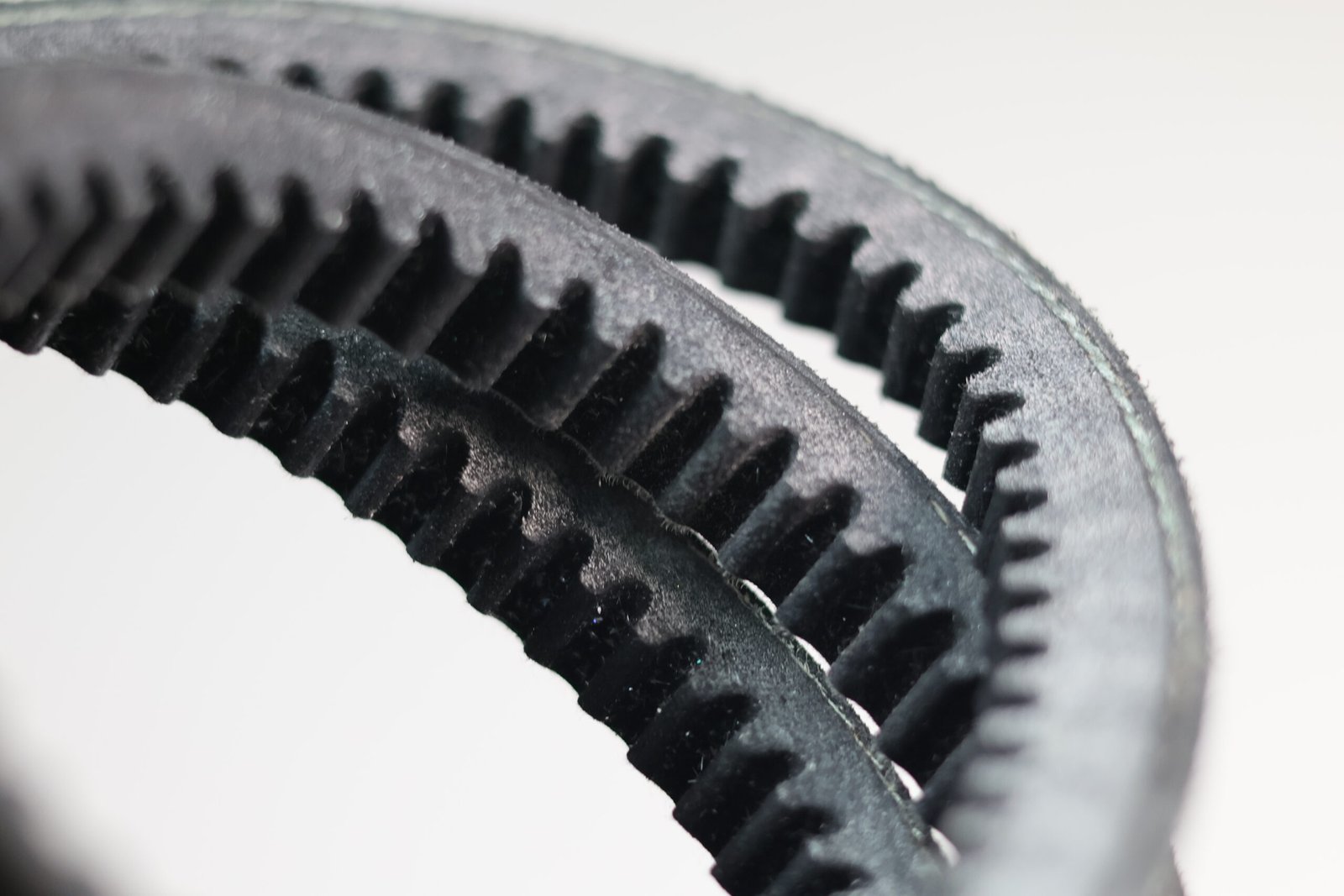

Automotive V-belts are older than serpentine belts, but they are still relevant in many replacement markets, auxiliary drive systems, and selected commercial vehicle applications. For buyers, the key issue is not whether V-belts are old technology. It is whether the belt section, compound, construction, and production consistency match the real application.
At LYBELT, we manufacture automotive V-belts for replacement supply, distributor programs, and OEM/custom development. The practical focus is stable fit, dependable quality, and repeat-order consistency.
| Parameter | Specification |
|---|---|
| Belt Types | Classical, narrow, cogged, wrapped depending on application |
| Common Sections | A, B, C, AX, BX, CX, 3V, 5V, 8V depending on requirement |
| Materials | EPDM, CR, NR depending on performance target |
| Reinforcement | Application-based cord structure |
| Quality System | IATF 16949, ISO 9001, ISO 14001, ISO 45001 |
Wrapped belts remain a common choice in standard-duty systems where stable transmission and conventional construction are suitable.
Cogged belts are often chosen where better flexibility, improved heat dissipation, or more efficient operation around smaller pulleys is needed.
Narrow sections are used where higher power transmission is required within a more compact belt profile.
The correct type depends on pulley design, load condition, speed, and available installation space. That is why a supplier should be able to discuss the application first instead of only offering a generic belt section.
V-belt service life depends heavily on the compound used. Even when dimensions are correct, the wrong material direction can shorten life, reduce flexibility, or create instability under heat and load.
For buyers comparing products, the better question is not only which material sounds better, but which compound is more appropriate for the real operating environment.
Automotive V-belts are still used in multiple replacement and equipment scenarios, including:
For buyers working across other automotive belt categories, you can also review our automotive belt range.
Automotive V-belt projects may involve more than ordering a common size. OEM and custom support can include:
Buyers looking for custom cooperation can also review our OEM & ODM page.
A V-belt may look simple, but dimensional variation, poor reinforcement bonding, or unstable compound quality can still create field problems. That is why supplier reliability matters even in mature product categories.
LYBELT operates under an IATF 16949 quality system. For buyers, this supports more structured production control, inspection discipline, and repeat-order consistency.
To better understand the supplier behind the product, buyers can also review our About Us page.
Wrapped belts use a conventional covered structure, while cogged belts are designed for greater flexibility and improved performance in certain drive conditions.
Yes. V-belts are still relevant in many replacement markets, auxiliary drive arrangements, and equipment-related applications.
Yes. Cross-reference support can be based on sample belts, part numbers, drawings, or application information.
Yes. OEM and private label support can include product marking, packaging, and custom supply coordination.
They should check section accuracy, material logic, product consistency, and whether the supplier can support repeat supply under stable standards.
If you are sourcing automotive V-belts for replacement supply or OEM/custom development, Contact Us with your part number, sample, or application details. We can help review the right belt direction for your market.


