Menu
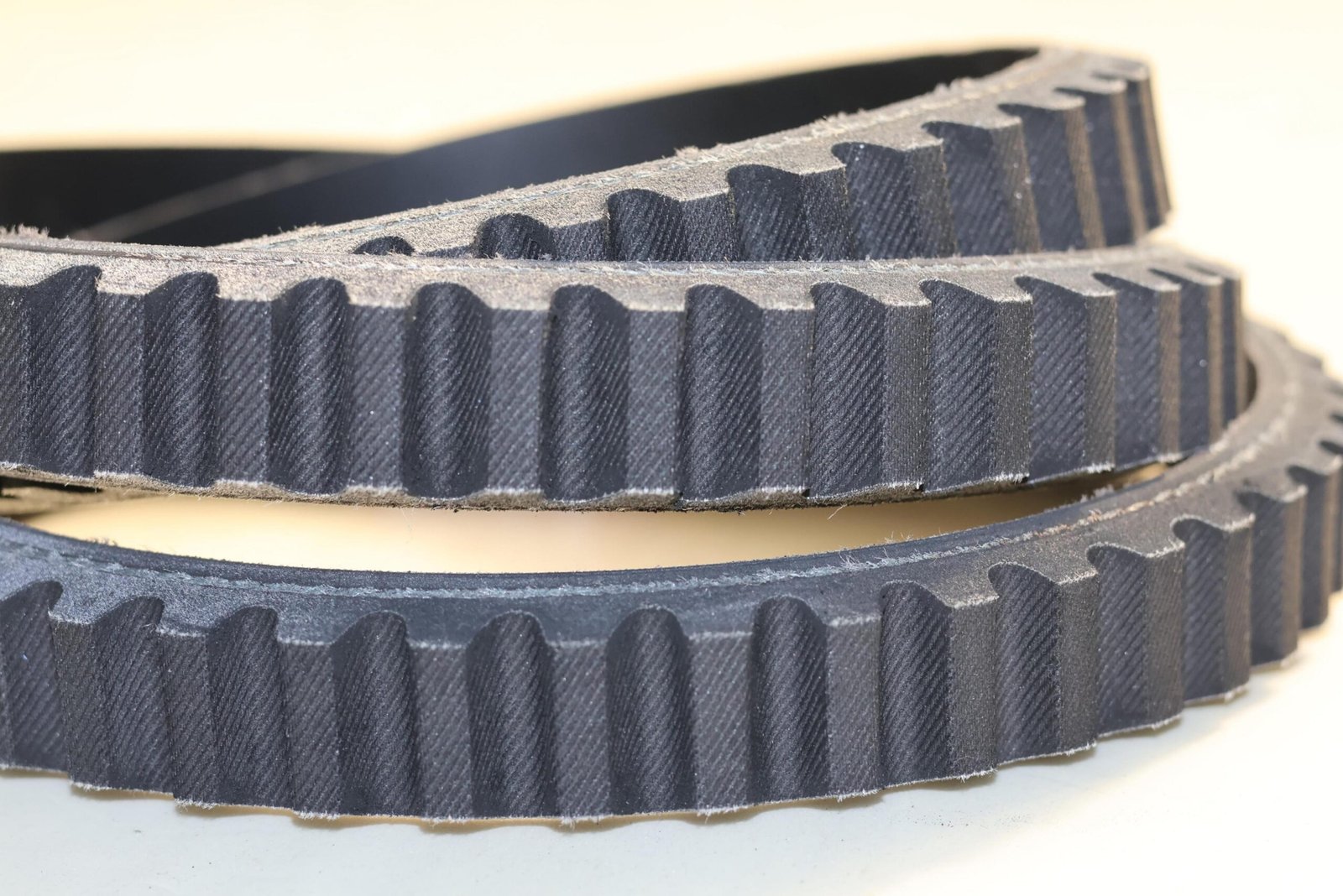
Cogged V-belts are what you get when you take a classic V-belt and make it better. The notches cut into the inner surface aren’t just for looks — they fundamentally change how the belt performs. Better flexibility, better heat dissipation, about 30% more power capacity from the same cross-section. For high-speed drives, compact systems, or anywhere you’re pushing a classic V-belt to its limits, cogged is the upgrade that actually delivers.
We’ve been manufacturing cogged V-belts since 2010, when we expanded our industrial belt range beyond wrapped belts. The manufacturing process is more complex — those cogs have to be precisely cut and spaced — but the performance benefits justify the extra cost for demanding applications.
| Parameter | Specification |
|---|---|
| Cross Sections | AX, BX, CX, DX (cogged classical); XPZ, XPA, XPB, XPC (cogged metric) |
| Length Range | 400mm to 5000mm+ |
| Construction | Raw edge with molded cogs |
| Materials | CR (Neoprene), EPDM, HNBR (high-performance) |
| Cord Reinforcement | Polyester (standard), Aramid (heavy-duty) |
| Temperature Range | -30°C to +80°C (standard), -40°C to +120°C (heat-resistant) |
| Standards | ISO 4184, DIN 7753, RMA IP-22 |
| Certifications | IATF 16949, ISO 9001 |
The notches in a cogged belt aren’t random — they’re engineered to solve specific problems that limit classic V-belt performance:
The cogs allow the belt to bend more easily around pulleys. This means you can use smaller pulley diameters without overstressing the belt. For compact drive designs where space is limited, this is critical.
The cog valleys create air channels as the belt runs. More surface area exposed to air means better cooling. For high-speed drives where friction generates significant heat, cogged belts run cooler and last longer.
The combination of better flexibility and heat dissipation allows cogged belts to transmit approximately 30% more power than equivalent wrapped belts. You can either use a smaller belt for the same power or get more capacity from the same size.
When a belt bends around a pulley, the inner surface compresses while the outer surface stretches. The cogs reduce compression stress on the inner surface, extending belt life — especially on small-diameter pulleys.
| Factor | Classic (Wrapped) | Cogged (Raw Edge) |
|---|---|---|
| Power Capacity | Baseline | ~30% higher |
| Minimum Pulley Diameter | Standard | 20-30% smaller possible |
| Heat Dissipation | Good | Excellent |
| Flexibility | Good | Excellent |
| Speed Capability | Up to 30 m/s | Up to 50 m/s |
| Efficiency | ~95% | ~97% |
| Cost | Lower | 15-25% higher |
| Best For | Standard drives, cost-sensitive | High-speed, compact, demanding |
Cogged V-belts are the right choice when:
For standard industrial applications with moderate speeds and adequate pulley sizes, classic wrapped V-belts remain cost-effective. Don’t pay for cogged performance you don’t need.
| Section | Top Width | Equivalent Classic | Power Range | Min. Pulley Dia. |
|---|---|---|---|---|
| AX / XPA | 13mm | A / SPA | 1-10 kW | 63mm |
| BX / XPB | 17mm | B / SPB | 3-25 kW | 100mm |
| CX / XPC | 22mm | C / SPC | 10-100 kW | 160mm |
| DX | 32mm | D | 25-250 kW | 250mm |
Cogged belts use the same pulley grooves as their classic equivalents. An AX belt fits in an A-section pulley. This makes upgrading from wrapped to cogged straightforward — same pulleys, better belt.
Good all-around performance for most industrial applications. Moderate oil resistance and heat tolerance.
For high-temperature environments or outdoor installations. Better ozone resistance than CR.
Superior oil resistance combined with high heat tolerance. For demanding applications where standard compounds don’t survive.
Cogged belt manufacturing requires tighter tolerances than wrapped belts — the cog geometry must be precise for proper performance. Our IATF 16949 certified quality system ensures:
We work with industrial distributors and OEMs on supply programs:
Yes, if the cross-section matches (A→AX, B→BX, etc.). Cogged belts fit the same pulleys as their wrapped equivalents. It’s generally an upgrade — you get better performance from the same drive. Just make sure the length matches.
Manufacturing complexity. The cogs must be precisely molded or cut, and the raw-edge construction requires different processing than wrapped belts. The 15-25% price premium is justified by the 30% power increase and longer service life in appropriate applications.
Same tensioning principles as wrapped belts. However, because cogged belts are more flexible, they may require slightly less tension for the same grip. Follow the equipment manufacturer’s specifications or standard V-belt tensioning guidelines.
Standard sizes: 300 pieces. Custom lengths: 500 pieces. Contact us to discuss your requirements.
Need cogged V-belts? Contact LYBELT today:
📧 Email: luxin@lybelt.com
📞 Phone/WhatsApp: +86 137 2291 3530